History
| |
El General
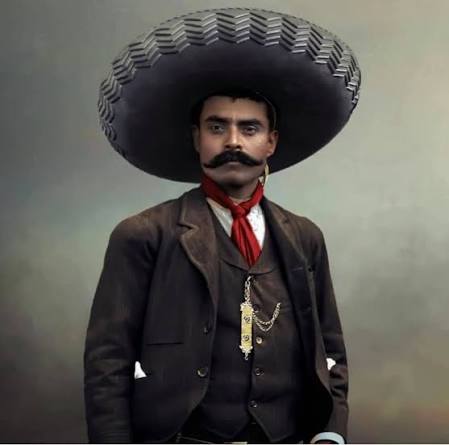
“Men, like trees, have their roots; they are bonds that tie them to their past, their race, their environment, and their heritage,” stated Jesús Sotelo Inclán in his work *Raíz y razón de Zapata*. He continues: “One must delve into the historical past of each individual to discover their obscure origins, their essential elements—everything that may be represented and intertwined in the very earth from which man is made.”
In Morelos, his birthplace, we recognize the invaluable legacy of the man who led a struggle not for money, but for the law; a struggle not for power, but for justice. In Zapata, we find the faithful heir to a long-standing tradition of defending the rights of the people, recognizing himself as just one of his fellow countrymen, building community day by day within a framework of respect and the rule of law.
Under the motto “Justice and Law,” the people of the south promulgated the Plan of Ayala, whose fundamental premise was the assertion of the peoples’ rights to the lands, waters, and forests—rights that had been violated for centuries of exploitation. It was, in the words of its own creators, a solemn manifesto “before the face of the civilized world that judges us and before the nation to which we belong and which we love.”
The Plan de Ayala became the benchmark for drafting and disseminating—from the headquarters of the Southern Liberation Army in Tlaltizapán—manifestos, laws, and decrees that gave the 1910 movement an ideological meaning unlike any other revolutionary movement. The Plan of Ayala was the seed that the men and women of the South nurtured with their struggle, their labor, and their lives, cultivating the fields of their aspirations.
Thus, we discover Emiliano through his origins, through his people, and in the light of his ideals; we discover him in the towns of Morelos that, day after day, continue to water with sweat and, through hard work, reap the fruits of the bountiful southern land.
Author: Jesús Zavaleta Castro
| |